
Attorney for Wills and Estate Planning: 7 Essential Powerful Steps 2025
Securing Your Legacy: Why Professional Estate Planning Matters
An attorney for wills and estate planning is a legal professional who specializes in helping individuals prepare for the transfer of their assets after death and planning for potential incapacity. Here’s what you need to know:
- Purpose: They draft legally binding documents that ensure your wishes are carried out regarding your property, minor children, healthcare decisions, and financial affairs
- Key Services: Will drafting, trust creation, power of attorney designation, healthcare directives, tax planning, and probate avoidance strategies
- When to Hire: After major life events (marriage, children, property purchase), when your net worth increases significantly, or at least by age 40
- Cost Range: $300-$3,000 for basic estate plans; $3,000-$10,000+ for complex trusts and comprehensive planning
Estate planning is not just for the wealthy. When the average person thinks of an estate, they might imagine a mansion with sprawling grounds—yet legally, an estate is simply everything you own. Without proper planning, your assets could be distributed according to default state laws rather than your wishes.
“Estate planning is an essential tool for all individuals regardless of wealth, ensuring your family home remains in your family for generations to come.”
A comprehensive estate plan typically includes a will or living trust, financial power of attorney, healthcare directive, and HIPAA authorization. These documents work together to protect your assets, provide for your loved ones, communicate your wishes, and avoid the costly probate process.
I’m Paul Deloughery, an attorney with 25 years of experience specializing in estate planning and probate law. As an attorney for wills and estate planning, I’ve helped thousands of clients create customized plans that protect their legacies and give them peace of mind.
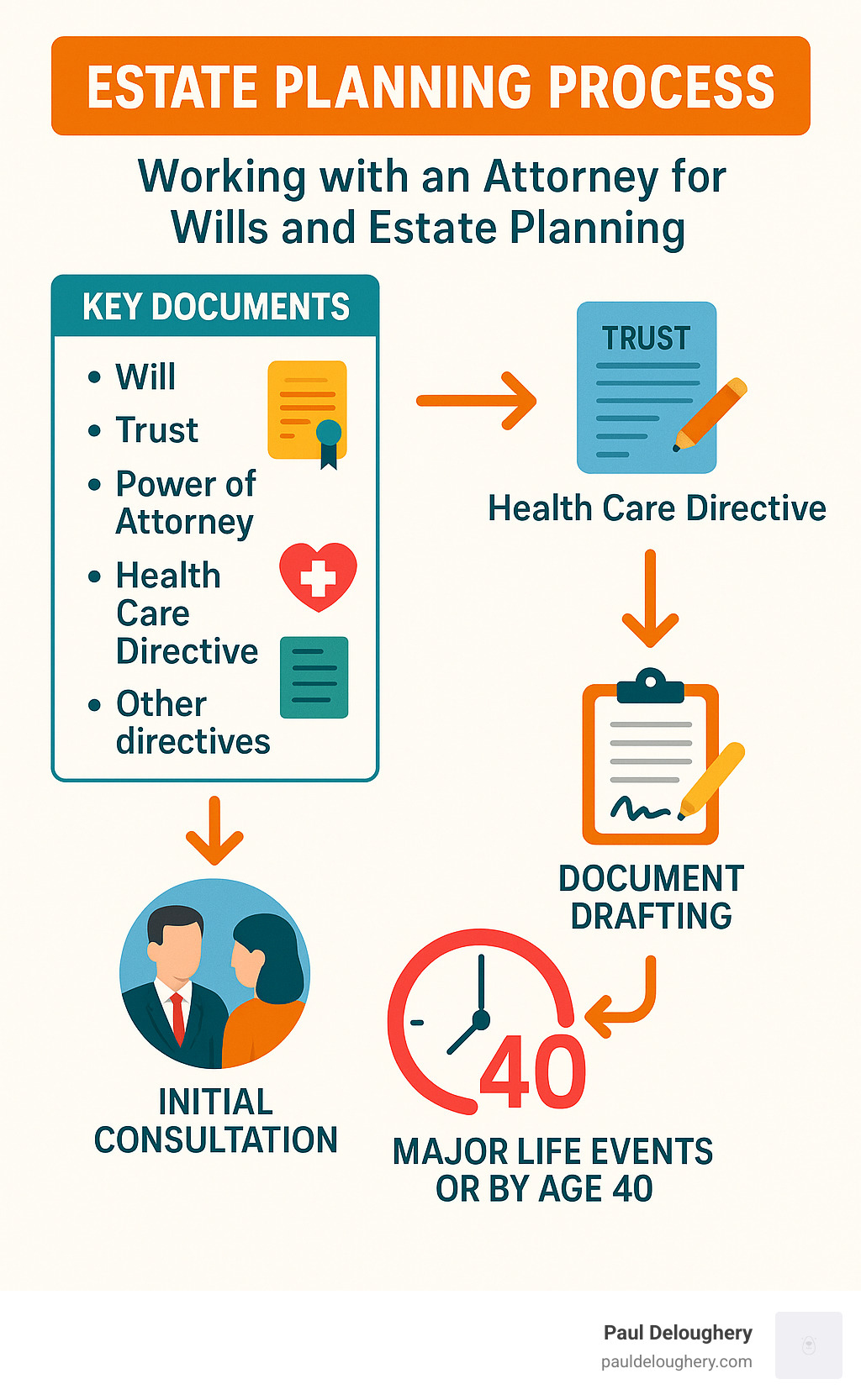
Estate Planning 101: Importance, Timing & Common Misconceptions
Let’s be honest—estate planning often gets pushed to the bottom of our to-do lists. Many folks believe it’s something only wealthy people need to worry about. But here’s the truth: if you own anything at all, you need an estate plan.
Estate planning isn’t just about distributing wealth—it’s about protecting the people you love from unnecessary headaches during an already difficult time. When you create an estate plan, you’re giving your family an incredible gift: clarity, direction, and peace of mind.
Without proper planning, the costs can be surprising. In California, probate expenses typically range between 5% to 7% of your estate’s value. That means a modest $500,000 estate could face up to $35,000 in probate costs! The non-financial costs can be even more painful—family conflicts, stress, and the state making decisions about your assets rather than following your wishes.
When Should You Start Estate Planning?
The simple answer? Now.
Many clients wish they’d started sooner. Estate planning becomes especially important during these life milestones:
- Getting married or divorced
- Welcoming children into your family
- Buying your first home
- Starting a business venture
- Receiving an inheritance
- Relocating to another state

The Importance of Regular Reviews
Think of your estate plan as a living document that should grow and change as your life does. Even the best estate plan needs freshening up every 3 to 5 years. Tax laws change, relationships evolve, and assets come and go.
Avoiding “Tangled Titles”
One of the most heartbreaking situations involves what we call “tangled titles.” This happens when someone passes away without clearly documenting how their home should be transferred.
The consequences can be devastating: family members unable to sell the property when needed, relatives fighting over ownership rights, and sometimes even losing the family home entirely.
Estate planning isn’t about how much money you have—it’s about protecting what matters to you, preserving family harmony, and ensuring your hard-earned assets benefit the people you care about most.
Building Your Plan: Wills, Trusts & Core Legal Instruments
Creating a solid estate plan is like building a house – you need the right tools and a strong foundation. Let’s walk through the essential legal documents that will protect your loved ones.
Last Will and Testament
A will is the cornerstone of most estate plans. Think of it as your final set of instructions that tells everyone:
- Who’s in charge of handling your affairs (your executor)
- Who receives your assets (your beneficiaries)
- Who will care for your minor children (guardians)
- Your preferences for final arrangements
For your will to stand up legally in states like Arizona and Minnesota, you need to be at least 18 years old and of sound mind. The document must be signed by you and witnessed by at least two competent individuals.
A will only takes effect after you’ve passed away, and it must go through probate – the court process that can sometimes be lengthy and costly for your loved ones.
Living Trusts
A living trust offers additional protections and benefits that a will alone can’t provide. When you create a trust, you’re essentially forming a legal container that holds your assets. You (as the trustor) transfer ownership to a trustee (often yourself initially) who manages everything for your beneficiaries.
Unlike a will, a living trust:
- Springs into action as soon as you fund it with assets
- Bypasses the public and often expensive probate process
- Keeps your financial affairs private (wills become public record)
- Provides a seamless transition if you become incapacitated
Here’s how wills and trusts compare:
| Feature | Will | Living Trust |
|---|---|---|
| Probate | Required | Avoided |
| Privacy | Public record | Private |
| Cost to establish | Lower ($300-1,000) | Higher ($1,500-5,000+) |
| Incapacity planning | None | Included |
| Contest difficulty | Easier to challenge | More difficult to contest |

Both wills and trusts have their place, and many comprehensive plans include both. The State Bar of California guide on wills provides excellent state-specific information, while AARP’s 10 Things You Should Know About Living Trusts offers a straightforward overview of trust benefits.
As an attorney for wills and estate planning, I’ve seen how the right legal instruments can provide tremendous peace of mind. Whether you need basic documents or a more complex strategy, our Estate Planning Services are designed to protect what matters most to you.
Power of Attorney & Healthcare Directives
Durable Power of Attorney
A durable power of attorney allows someone you trust to handle your financial matters when you can’t. Unlike its “regular” counterpart, a durable power of attorney keeps working even if you become incapacitated.
Your chosen agent can manage your bank accounts, buy or sell property, handle government benefits, keep your utilities running, and file your taxes. Many clients feel immediate relief once this document is in place.
One important thing to remember: your power of attorney terminates at your death and doesn’t give your agent any authority over your estate administration. That’s where your will or trust takes over.
Healthcare Directives
Healthcare directives ensure your wishes are heard even when you can’t speak for yourself. An advance healthcare directive (sometimes called a living will) serves two vital purposes:
First, it states what medical treatments you would or wouldn’t want if you developed a terminal condition and couldn’t communicate. Second, it appoints someone you trust as your healthcare proxy—your medical decision-maker who will advocate for your wishes.
Alongside your healthcare directive, a HIPAA authorization is essential. This document gives doctors permission to share your medical information with specific people. Without it, even your spouse or adult children might be denied access to critical health information during an emergency.
These documents aren’t just for older adults. As I explain to clients of all ages in our Estate Planning for Millennials consultations, incapacity planning is truly ageless. A car accident or unexpected illness can happen to anyone at any time.
I’ve seen how these simple documents can prevent family conflicts and ensure your healthcare reflects your values, not someone else’s interpretation of what you might have wanted.
Providing for Minor Children & Special Needs
As a parent, there’s nothing more important than knowing your children will be cared for if the unthinkable happens. This part of estate planning often triggers the deepest emotions, but it’s also where thoughtful planning brings the greatest peace of mind.
Guardianship Designations
Your will serves as the legal document where you name guardians for your minor children. Without this crucial designation, courts step in to decide who raises your little ones—often leading to family disagreements and outcomes that might not align with your values or wishes.
When selecting guardians, consider: Do they share your values and parenting approach? Are they physically able to care for active children? Do they have the financial stability to take on this responsibility? Where do they live, and would your children need to relocate? And perhaps most importantly—have you actually asked if they’re willing to serve in this role?
Having these conversations now, while difficult, prevents far more painful situations later.
Trusts for Children
A testamentary trust created through your will provides structure and protection for your children’s inheritance. Unlike simply leaving assets directly to minors (which courts won’t allow anyway), a thoughtfully designed trust can:
Hold assets safely until your children reach an age where they’re financially mature—perhaps distributing in stages at 25, 30, and 35 rather than all at once. The trust can provide funds for education, healthcare, and living expenses while protecting these assets from creditors or impulsive financial decisions.
Special Needs Planning
For families with dependents who have special needs, a special needs trust serves as a critical tool that allows you to provide financial support without disqualifying your loved one from essential government benefits like Medicaid or Supplemental Security Income (SSI).
These specialized trusts create a financial safety net that improves quality of life while preserving access to healthcare and support services.
Attorney for Wills and Estate Planning: Role, Selection & Cost
Finding the right attorney for wills and estate planning is a bit like finding a good family doctor – you need someone who truly understands your unique situation and can guide you with expertise and compassion.

What Does an Attorney for Wills and Estate Planning Do?
When you work with an experienced estate planning attorney, you’re getting far more than just document preparation. A good attorney becomes your trusted advisor, helping you think through scenarios you might never have considered.
Your attorney will conduct a thorough document audit of any existing estate planning materials and help you create a complete asset inventory. One of the most valuable services your attorney provides is tax strategy development. Without proper planning, your loved ones might end up sending a significant portion of your hard-earned assets to the government.
Estate planning attorneys also excel at dispute prevention. Having seen countless family conflicts, experienced attorneys craft documents specifically designed to minimize disagreements.
The best estate planning attorneys collaborate with your financial advisors, CPAs, and insurance agents to create a truly holistic plan that addresses all aspects of your financial life.
Selecting the Right Attorney
Finding the perfect attorney for wills and estate planning takes some effort, but it’s worth it. Look for someone who specializes primarily in estate planning rather than a general practitioner.
Experience matters tremendously in this field. Attorneys who have handled probate litigation often draft better estate plans because they’ve seen what can go wrong when documents aren’t properly prepared.
Since estate laws vary significantly by state, make sure your attorney is well-versed in Arizona or Minnesota law, depending on your location.
Pay attention to how comfortable you feel with the attorney. You’ll be sharing personal details about your family relationships, finances, and wishes after death – all sensitive topics that require trust and understanding.
Cost Considerations
The investment in proper estate planning varies based on your needs and situation. A basic will package typically runs $300-$1,000, while a will with testamentary trusts might cost $1,000-$2,500. For more comprehensive protection, a revocable living trust package generally ranges from $1,500-$5,000.
This might seem substantial compared to online options, but consider the alternative: probate can cost between 5% to 7% of your estate’s value. On a modest $500,000 estate, that’s $25,000-$35,000 – far more than you’d spend on proper planning.
Questions to Ask Your Attorney
When meeting potential attorneys, ask about their experience: “What percentage of your practice is devoted to estate planning?” Find out how they stay current with ever-changing tax laws and what their process looks like for creating a personalized plan.
Discuss their fee structure and whether they offer ongoing support after documents are signed. Ask how often they recommend reviewing estate plans (hint: major life events should trigger a review, and a general update every 3-5 years is wise).
Advanced Strategies: Tax Efficiency, Probate Avoidance & Asset Protection
When your estate reaches a certain size or your family situation becomes more complex, it’s time to explore strategies beyond basic wills and trusts.
Tax Efficiency Strategies
Nobody wants to pay more taxes than necessary, especially when it comes to passing wealth to loved ones. While the federal estate tax exemption is quite generous right now ($12.92 million per individual in 2023), state estate taxes often kick in at much lower thresholds.
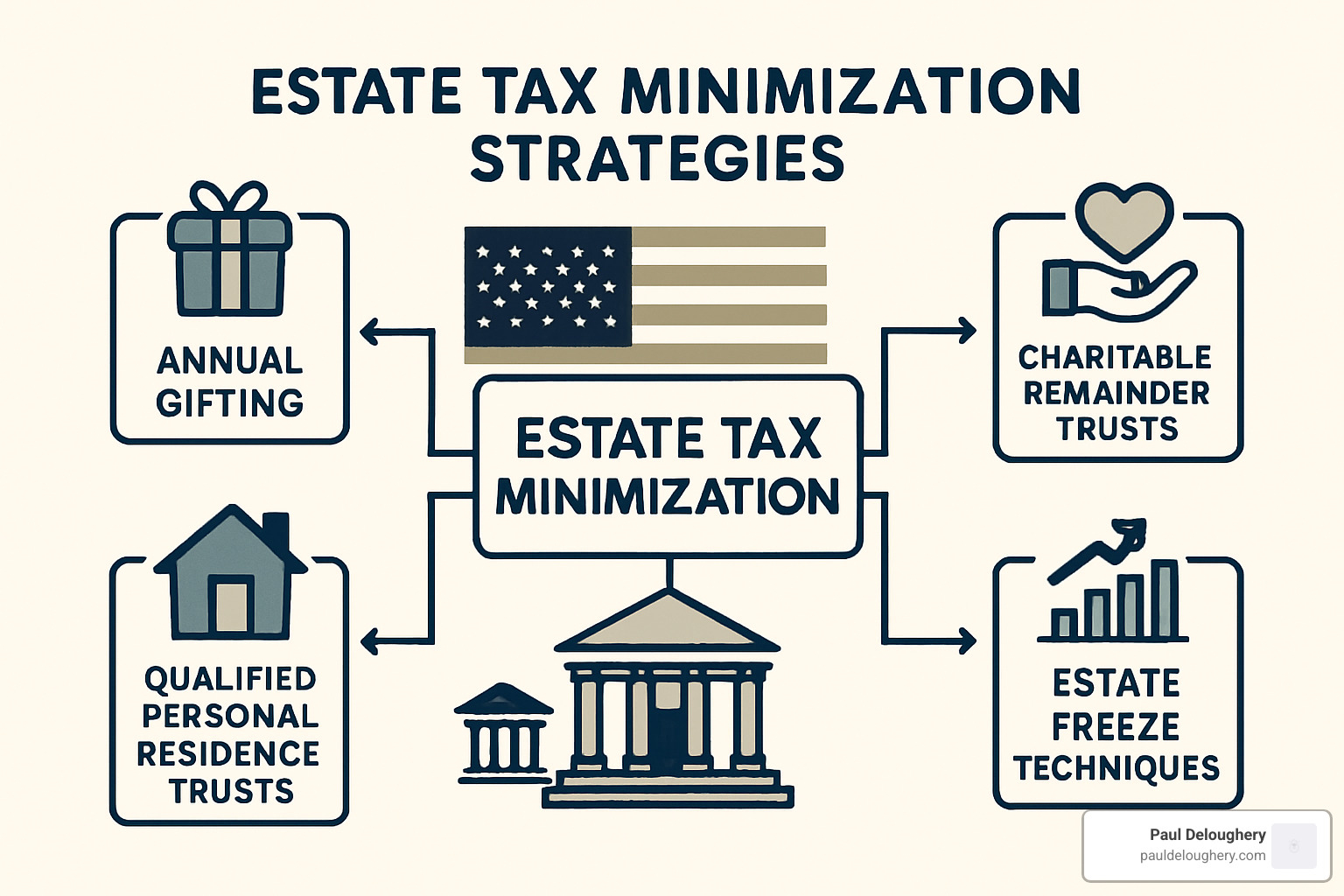
Here are some powerful ways to minimize the tax burden on your estate:
Annual gifting lets you share up to $17,000 (2023 limit) per person each year without triggering gift taxes.
Irrevocable Life Insurance Trusts (ILITs) keep life insurance proceeds outside your taxable estate.
Charitable Remainder Trusts offer a win-win: you receive income during your lifetime, and your favorite charity receives the remainder afterward.
Qualified Personal Residence Trusts (QPRTs) allow you to transfer your home to beneficiaries at a reduced gift tax value.
Probate Avoidance
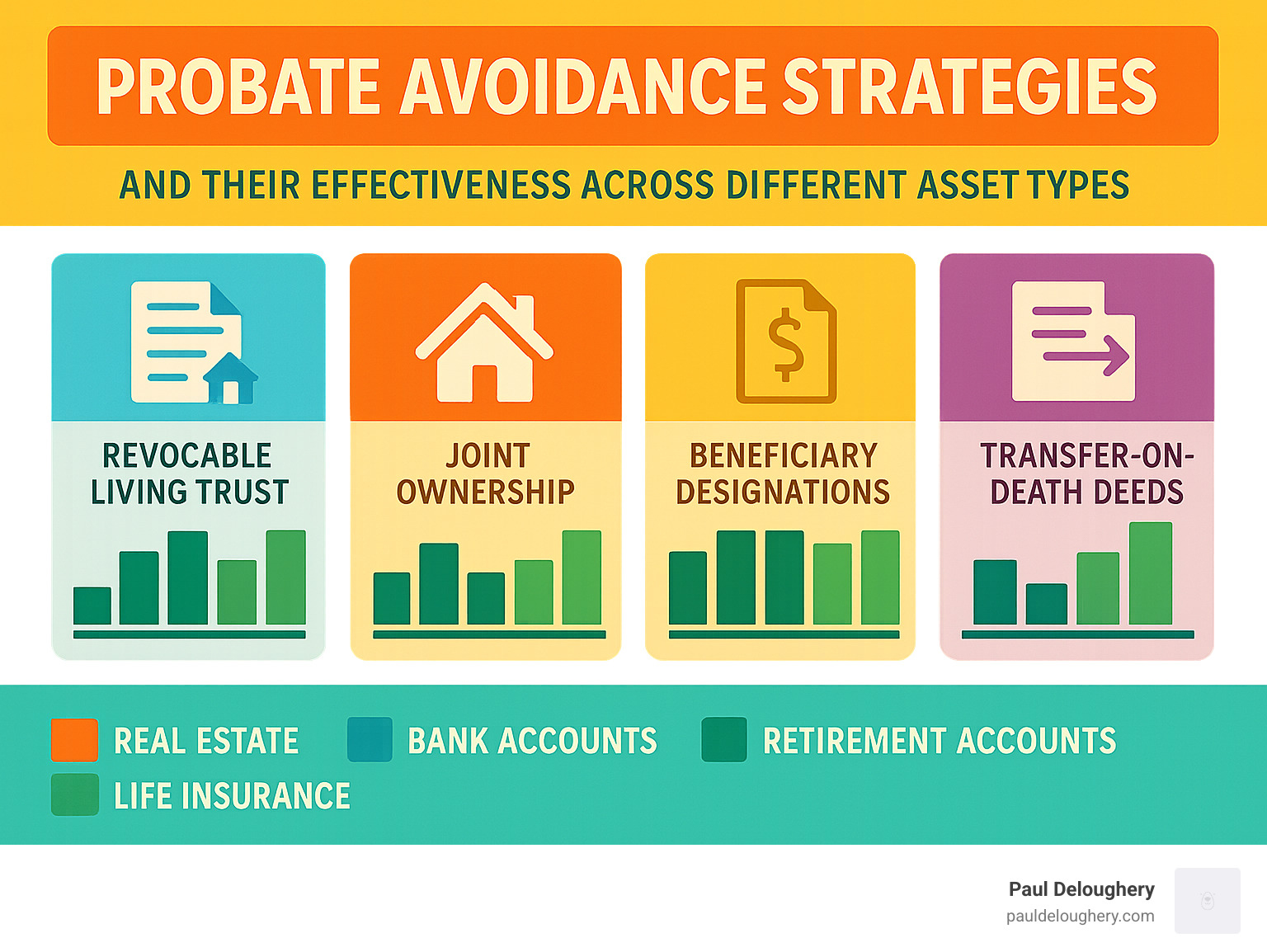
Probate is expensive, time-consuming, and completely public. Fortunately, we have several effective strategies to avoid it.
The revocable living trust remains the gold standard for probate avoidance when properly funded. I emphasize “properly funded” because I’ve seen too many beautifully drafted trusts fail simply because assets weren’t transferred into them.
Joint ownership with rights of survivorship allows property to pass automatically to the surviving owner without probate.
Don’t overlook the power of beneficiary designations on retirement accounts, life insurance policies, and certain financial accounts.
In both Minnesota and Arizona, you can use transfer-on-death deeds to pass real estate outside of probate.
Asset Protection Planning
In today’s litigious society, protecting your assets from potential creditors, lawsuits, and other risks is increasingly important.
Family Limited Partnerships (FLPs) consolidate family assets under centralized management while distributing ownership.
Limited Liability Companies (LLCs) create a legal wall between your personal and business assets.
For those with significant assets, Domestic Asset Protection Trusts available in certain states can shield assets from future creditors.
Irrevocable Trusts with Spendthrift Provisions not only protect assets from your beneficiaries’ creditors but also from their potentially poor financial decisions.
State-Specific Considerations
Minnesota residents face a state estate tax with an exemption much lower than the federal level.
Arizona has no state estate tax, but has specific rules regarding community property that must be carefully steerd.
These state differences highlight why working with an attorney for wills and estate planning who understands your specific state’s laws is so crucial.
For more information on protecting your assets for the long term, check out our Long-Term Wealth Preservation and Transferring Assets to a Trust resources.
Frequently Asked Questions
What happens if someone dies without a will?
Dying without a will (what lawyers call “intestate”) means your state’s intestacy laws take over. Your spouse typically inherits first, followed by children, parents, and other relatives according to your state’s version of the Uniform Probate Code. But these default rules rarely align perfectly with what most people would choose for themselves.
The court also appoints an administrator – someone you may not have selected – to manage everything. If you have young children, the court decides their guardian without any input from you about who would best raise them according to your values.
As I often tell my clients, “The word ‘chaos’ comes to mind when courts are left to distribute assets without a proper estate plan.”
How often should I update my estate plan?
I recommend reviewing your documents every 3 to 5 years as a baseline. However, certain events should trigger an immediate review:
Marriage, divorce or remarriage changes who you might want to inherit your assets.
New children or grandchildren may need to be included in your plans.
Loss of a spouse, beneficiary, or named executor/trustee requires adjustments to your documents.
Significant financial changes – like buying a home, starting a business, or receiving an inheritance.
Moving to a different state means dealing with new laws that might impact your plan’s effectiveness.
Tax law changes could create new planning opportunities or challenges.
Can probate be avoided or simplified?
Yes! There are several practical ways to minimize or completely bypass the probate process.
A fully funded revocable living trust is the most comprehensive solution. Assets properly transferred to your trust during your lifetime simply aren’t subject to probate.
For smaller estates, most states offer simplified procedures for estates under certain values (like California’s $150,000 threshold).
Proper beneficiary designations on life insurance, retirement accounts, and transfer-on-death accounts allow these assets to pass directly to named individuals without court involvement.
Joint ownership with rights of survivorship means property automatically transfers to the surviving owner when one owner dies – no probate required.
Conclusion
Estate planning isn’t just paperwork about what happens after you’re gone—it’s about protecting everything you’ve built, caring for the people you love, and making sure your voice is heard even when you can’t speak for yourself. A thoughtful estate plan brings incredible peace of mind, knowing you’ve taken care of what matters most.
Finding the right attorney for wills and estate planning makes all the difference in this journey. While online templates might seem convenient, they simply can’t provide the personalized guidance that addresses your unique family dynamics, assets, and goals.
I’ve seen how proper planning prevents family heartache. One client told me, “I sleep better at night knowing my children won’t have to guess what I wanted or fight over what I left behind.”
Our approach at Paul Deloughery goes beyond just preparing legal documents. Our Legacy Secure Plan weaves together legal protections, financial strategies, and family education to safeguard your autonomy, prevent painful conflicts, and ensure both your wealth and your values continue for generations.
The best estate plan is one that truly reflects who you are and what you care about. It should grow and change as your life does, with regular reviews to keep it current.
Don’t put this off until tomorrow. The greatest gift you can give your loved ones isn’t just your assets—it’s the clarity, guidance, and protection that comes from thoughtful planning.
Your legacy deserves protection. Contact us today to begin creating your comprehensive estate plan and secure everything you’ve worked for—and everything you believe in—for generations to come.