
Family Wealth Succession Planning: Avoid 70% Failure
Why Family Wealth Succession Planning is Critical for Your Legacy
Family wealth succession planning is the comprehensive process of transferring assets, values, and governance to future generations while minimizing taxes and preserving family harmony. It involves integrating legal structures like trusts and wills with tax optimization, business succession, heir preparation, and family governance. For the best results, planning should begin 5-10 years before any intended transfer and be regularly updated.
The statistics are sobering: 70% of wealth transfers to the next generation fail. Most fortunes are lost by the second or third generation, not due to poor investments, but because of unprepared heirs, family conflicts, and a breakdown in communication.
Research shows that successful wealth transfer requires more than just legal documents. It demands preparing your heirs to receive and manage wealth responsibly while preserving the family values that created the fortune in the first place. The complexity increases with blended families, multiple generations, and geographic dispersion. Without a proper plan, these dynamics can destroy wealth that took generations to build.
I’m Paul Deloughery, an estate planning attorney with 25 years of experience helping families steer family wealth succession planning. I’ve witnessed how proper planning preserves both wealth and family relationships, while poor planning destroys both.
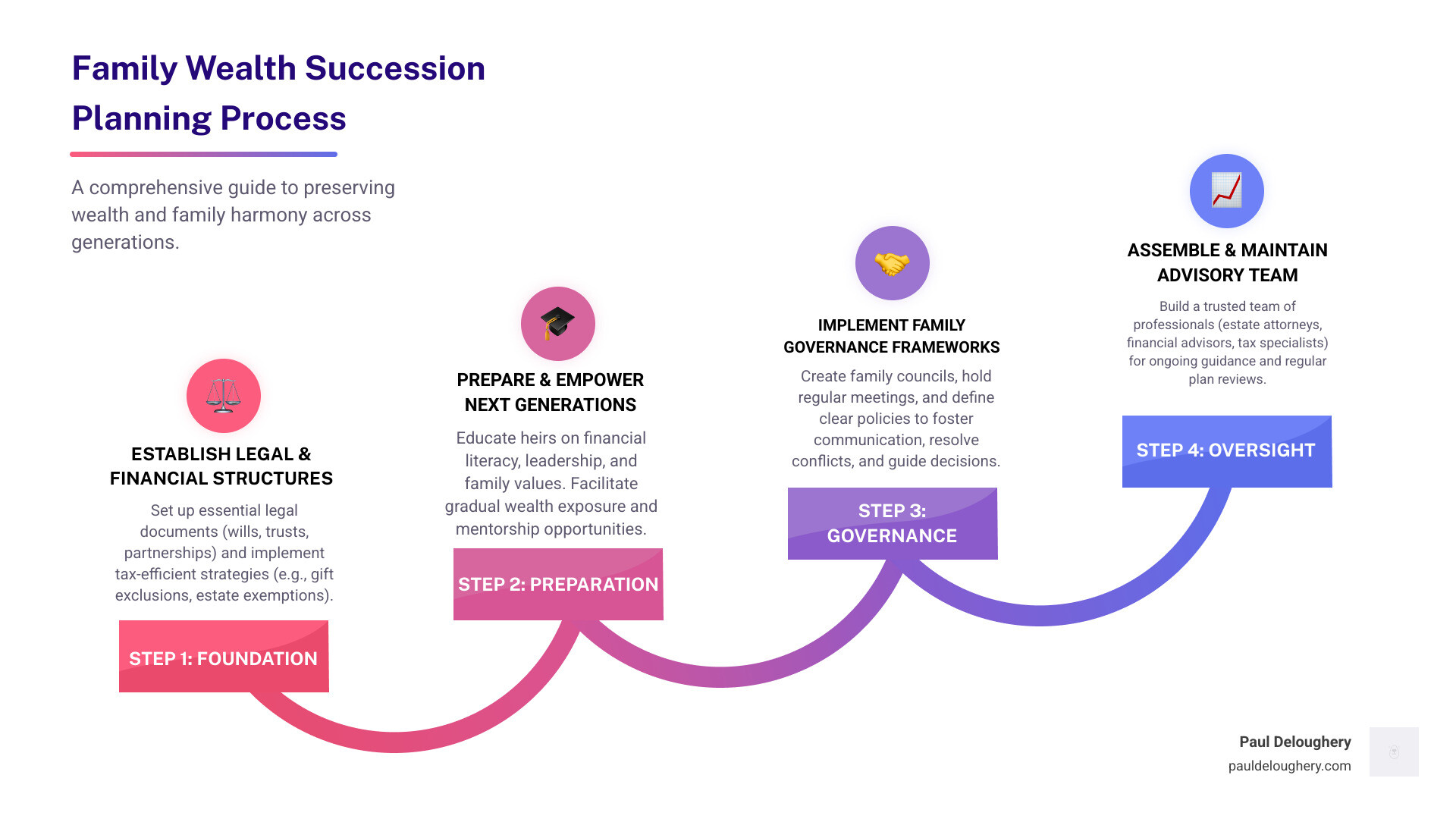
Family wealth succession planning terms you need:
Understanding Family Wealth Succession Planning
Many families assume family wealth succession planning is just a fancy term for writing a will. While both involve passing on assets, the scope is vastly different. Estate planning is a snapshot focused on what happens when you die—distributing assets and minimizing taxes. It’s a critical piece, but only one piece.
Family wealth succession planning is a living strategy that starts decades before a transfer and continues long after. It asks a more profound question: “How do I ensure my family thrives with this wealth for generations?” This requires a fundamentally different approach.
Research reveals a startling fact: 70% of wealth transfers fail. This isn’t due to market crashes, but because families focus on moving money instead of preparing people. They build brilliant legal structures but forget to build strong family structures.
The Five Forms of Family Wealth
Your money is likely the least important part of your wealth. True, lasting wealth is composed of five interconnected forms of capital:
- Financial Capital: The tangible assets—investments, real estate, and business interests. This is the easiest to transfer legally.
- Human Capital: The knowledge, skills, and wisdom of your family members. This must be cultivated, not just transferred.
- Intellectual Capital: The insights, processes, and “secret sauce” that created the wealth. This knowledge often dies with the founder if not intentionally preserved.
- Social Capital: Your family’s reputation, relationships, and community standing. It takes decades to build and can be lost in a moment.
- Ethical Capital: Your family’s core values, integrity, and sense of purpose. This gives wealth meaning and transforms it into a tool for good.
Families that beat the odds understand they must transfer all five forms of capital together.
Why 70% of Wealth Transfers Fail
Wealth transfer failures almost always trace back to human factors, not financial ones.
Unprepared heirs are the primary reason. Sophisticated legal structures are useless if the next generation lacks financial literacy, leadership skills, or a sense of purpose for the wealth.
Family conflicts are another major cause. Money magnifies underlying family dynamics, turning old resentments or perceived favoritism into bitter disputes that can tear a family apart.
Communication breakdown is perhaps the most preventable failure. Many parents avoid talking about money, fearing it will spoil their children. This creates a massive disconnect, where assumptions replace open dialogue about values, expectations, and responsibilities.
Lack of comprehensive planning is the final piece. Many families create an estate plan and never update it, leaving it frozen in time as life, laws, and businesses evolve. Or they focus solely on tax minimization, ignoring the human elements that ultimately determine success.
Successful family wealth succession planning is about preparing heirs to be responsible stewards. It means teaching financial literacy, sharing the family’s history and values, and involving the next generation in governance. When families transfer values alongside assets, wealth becomes a tool for building a stronger family and a lasting legacy.
Essential Components of Family Wealth Succession Planning
Building a successful family wealth succession planning strategy is like constructing a house; it requires a solid foundation, a strong framework, and attention to detail. A comprehensive plan integrates multiple layers of protection.

Legal Structures and Documentation
Your legal documents are the blueprint for your family’s financial future.
- Wills are the basic instruction manual for asset distribution. However, assets passed through a will typically go through probate—a public, lengthy, and often expensive court process.
- Avoiding Probate: In the rush to avoid probate, many people make critical mistakes. I’ve seen parents accidentally disinherit children, especially in blended families, because they focused on a single goal without considering the wider consequences of their actions. The key is balancing probate avoidance with comprehensive family protection.
- Trusts offer far more flexibility, control, and privacy than wills. Dynasty trusts, for example, can protect assets for generations (up to 500 years in states like Arizona) from creditors and divorce settlements.
- Family Limited Partnerships (FLPs) allow you to maintain control while gradually transferring ownership to the next generation, often with tax benefits.
- Buy-Sell Agreements are essential for business owners. They create a clear plan for what happens if an owner dies, becomes disabled, or retires, preventing chaos and forced sales that destroy value.
Tax Planning Strategies
Smart tax planning uses legal tools to maximize the wealth that stays within your family.
- Annual Gift Tax Exclusion: In 2024, you can give up to $18,000 per person tax-free. A married couple can give $36,000 to each child, transferring significant wealth over time.
- Federal Estate Tax Exemption: This is $13.61 million per person in 2024, but it is scheduled to be cut by about half after 2025. Families with substantial wealth should act now to use this high exemption.
- Advanced Trusts: Strategies using Grantor Retained Annuity Trusts (GRATs) or Intentionally Defective Grantor Trusts (IDGTs) can transfer appreciating assets to heirs with minimal or no gift or estate tax.
Business Succession Elements
For family businesses, you’re transferring a living enterprise, not just assets.
- Ownership vs. Management: It’s crucial to separate ownership succession from management succession. The best owner may not be the best CEO. The three-circle model (Family, Business, Ownership) helps clarify roles and prevent conflicts.
- Valuation and Fairness: A professional business valuation is critical, especially when some children are active in the business and others are not. This allows for fair distribution, compensating active children for their work while providing for other siblings.
- Governance: Structures like family councils or advisory boards create a framework for decision-making after you step back. Sometimes, the best decision for family harmony is to sell the business and reinvest the proceeds in a way that aligns with the next generation’s skills and interests.
Successful family wealth succession planning starts early, communicates openly, and prepares the next generation to be responsible stewards of both the wealth and the values behind it.
Preparing the Next Generation for Wealth
The most sophisticated legal strategies will fail if the heirs are unprepared. My 25 years of experience have shown that family wealth succession planning is as much about preparing the people as it is about preparing the assets. You wouldn’t hand over the keys to a complex machine without proper training; wealth is no different.

Successful families focus on three key areas: building skills, fostering communication, and gradually introducing responsibility.
Education and Skill Development
True wealth management requires a broad skill set.
- Financial and Strategic Intelligence: Heirs need to understand investments, taxes, and how to deploy capital. This starts with basics like personal budgeting and grows from there.
- Communication and Decision-Making: Family dynamics are complex. Heirs must learn to steer sensitive financial topics, lead meetings, and make sound choices under pressure.
- Relationship Building: Managing wealth means working with a team of advisors. Heirs must know how to build and manage these professional relationships.
- Business Acumen: For business-owning families, this is vital. Encourage external work experience before joining the family business to bring in fresh perspectives. Formal assessments can help match skills to roles.
Family Governance and Communication
Open, structured communication is the glue that holds a family’s wealth and harmony together.
- Family Meetings and Councils: These create a formal space for decision-making, value alignment, and honest conversation. They allow younger members to learn by observing before taking on active roles.
- Governance Policies: Documenting policies on family employment, compensation, and investment decisions provides clarity and prevents future conflicts.
- Values Transmission: Heirs must understand the family’s history, the lessons learned, and the values that created the wealth. This ensures they see themselves as stewards, not just beneficiaries.
Gradual Wealth Exposure
Throwing unprepared heirs into wealth management is a recipe for disaster. A gradual approach builds confidence and competence.
- Start Small: Begin with managing an allowance, then move to hands-on involvement with family assets, like helping with a property or working in the family business.
- Mentorship: Pair younger family members with experienced mentors, both inside and outside the family, to accelerate their learning.
- Progressive Responsibility: Start with small roles, like overseeing a charitable fund or observing investment meetings. As they demonstrate readiness, their responsibilities can grow.
- Transparency: Don’t keep succession plans a secret. Sharing the details allows heirs to prepare mentally and emotionally for their future roles.
This preparation is what separates families who preserve their legacy from those who lose it.
Common Challenges and Solutions in Family Wealth Succession Planning
Family wealth succession planning would be simple if families were simple. But they are complex, emotional systems. Insights from sources like the Global Wealth Management Summit consistently show that the biggest obstacles are not financial, but human: family dynamics, generational divides, and poor communication.
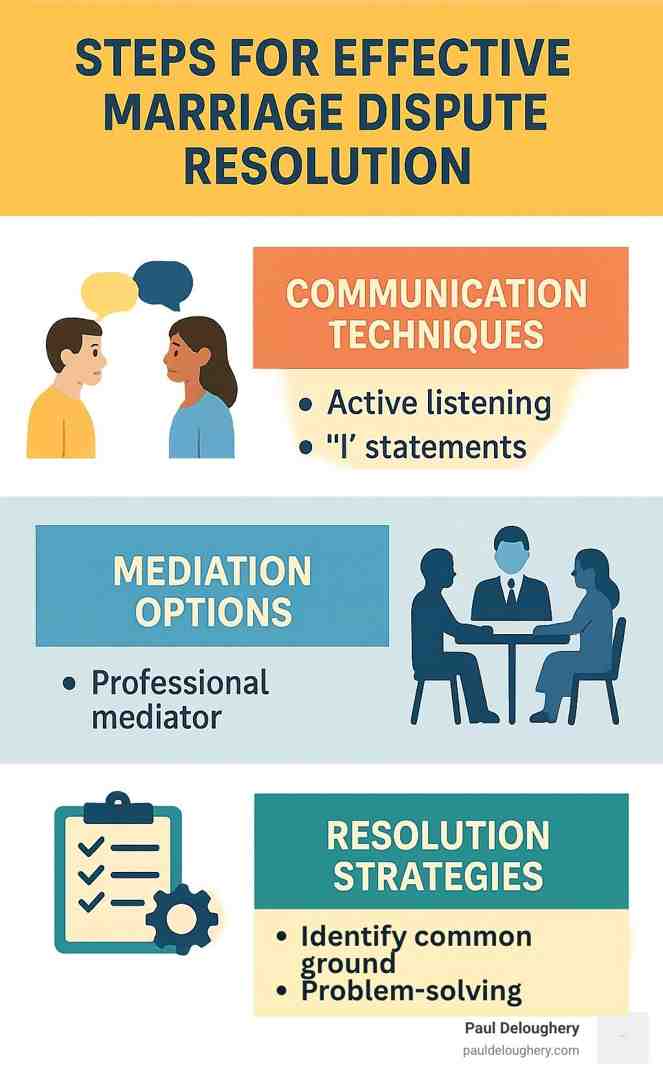
The good news is that these challenges are predictable and manageable with the right strategies.
Overcoming Family Conflicts
Conflict is the silent killer of wealth transfers. The infamous Ambani family feud, which erupted over the lack of a will, is a stark reminder that no family is immune.
- Solution: Facilitated Dialogue. An objective third party can guide conversations away from emotion and toward productive solutions. The focus should be on listening and validating feelings, even amid disagreement.
- Solution: Clear Governance. A family constitution or council establishes the rules of engagement before a crisis hits, providing a roadmap for resolving disputes.
- Solution: Fair, Not Equal, Distribution. For unique assets like heirlooms, consider a family auction or lottery system. For a business, an active child might get controlling shares while non-active siblings receive economic interests through trusts.
Addressing Generational Differences
Each generation has a unique worldview. What was important to the wealth creator may seem irrelevant to their grandchildren.
- Solution: Values Alignment. Bridge generational gaps by sharing family stories—how the wealth was created, the sacrifices made, and the purpose behind the money. This gives the wealth meaning for younger generations.
- Solution: Open Communication. Parents must be open to new ideas, and children must appreciate the wisdom of experience. Finding common ground, such as blending traditional investments with impact investing, can honor both perspectives.
- Solution: Flexibility. Generational differences can be a source of strength. Younger generations often bring fresh ideas about technology or social responsibility that can improve the family’s legacy.
Managing Complex Family Structures
Modern families are diverse, and planning must reflect that reality.
- Solution: Proactive Planning for Blended Families. Clear communication from the start is essential to ensure stepchildren and children from previous relationships understand their inheritance rights, preventing future conflict.
- Solution: Equitable, Not Identical, Treatment. In geographically dispersed families or where interests vary, the key is fairness. A child passionate about the family business might receive company shares, while a sibling pursuing a different career receives non-business assets of equivalent value through a trust. This respects everyone’s path while ensuring all benefit from the family’s success.
Successful planning anticipates these challenges and builds solutions into the framework from the beginning.
Advanced Strategies and Professional Guidance
Think of family wealth succession planning as building a cathedral—a multi-generational masterpiece that requires master craftsmen and careful coordination. This is not a do-it-yourself project. The families who succeed understand that it demands specialized expertise and a long-term perspective.
Building Your Advisory Team
Your succession plan requires a coordinated team of professionals, each bringing essential expertise.
- Estate Planning Attorney: The architect who designs the legal framework of wills, trusts, and other structures to protect your family.
- Financial Advisor: The strategic partner who manages investments and aligns your financial reality with your long-term goals.
- Tax Professional (CPA): The specialist focused on minimizing taxes to maximize what your heirs receive.
- Family Governance Specialist: A critical but often overlooked expert who helps establish family councils, communication protocols, and decision-making frameworks to manage the human side of wealth.
- Supporting Professionals: Appraisers provide accurate valuations for assets, while insurance professionals can structure policies to provide liquidity for taxes or equalize inheritances.
The key is ensuring this team works in harmony, not in silos, toward a single, unified vision.
Implementation Timeline and Best Practices
Family wealth succession planning is a marathon, not a sprint. It requires patience, foresight, and adaptability.
- Start Early: Begin planning 5-10 years before any anticipated retirement or transfer. Early planning provides more options and mitigates risk.
- Review Regularly: Your plan is a living document. Review and update it annually or after any major life event (birth, death, marriage, divorce) or change in tax law.
- Document Everything: Clear, written agreements and policies eliminate ambiguity and prevent future disputes about intentions.
- Communicate Consistently: Establish regular family meetings with clear agendas to maintain alignment and transparency. Successful families cite communication as their secret weapon.
- Plan for Contingencies: Life is unpredictable. Develop scenarios for “involuntary succession” due to death or disability to ensure your family is protected no matter what.
The goal is not a perfect plan from day one, but a solid, evolving foundation. With the right team and approach, you are not just transferring wealth—you are building an enduring legacy.
Frequently Asked Questions about Family Wealth Succession Planning
Over my 25 years as an estate planning attorney, I’ve found that families often share the same fundamental questions as they begin this journey. Here are the answers to the most common ones.
What is the difference between estate planning and family wealth succession planning?
This is the most critical distinction. Estate planning is event-driven; it focuses on the efficient distribution of your assets after you die through tools like wills and basic trusts. It asks, “Who gets what?”
Family wealth succession planning is a multi-generational process. It includes estate planning but goes much further by preparing your heirs to receive wealth responsibly, preserving family values, and establishing governance structures to maintain harmony. It asks, “How do we ensure our family thrives for generations?” It’s the difference between writing a will and building a legacy.
How early should families start succession planning?
The ideal time is 5-10 years before a major transition, like retirement. However, it’s never too early to start. The core of succession planning is preparing people, which takes time. Heirs need years to develop financial literacy, absorb family values, and gradually take on more responsibility. You cannot rush this process.
Starting early provides greater flexibility for tax planning and allows the plan to adapt to life’s changes. The most common regret I hear from clients is, “I wish we had started this sooner.”
What are the most effective strategies for preparing heirs?
This is the key to avoiding the 70% failure rate of wealth transfers. Preparing heirs is a holistic process that goes beyond just financial education.
- Share Your Story: Start with your family’s values and history. When heirs understand the “why” behind the wealth—the hard work, the challenges, the principles—they are more likely to become responsible stewards.
- Provide Gradual Responsibility: Start with age-appropriate tasks, like managing an allowance, and progress to more significant roles, like helping with a family property or participating in a family council. This allows them to learn and make small mistakes early on.
- Encourage External Experience: Having heirs work outside the family business builds their confidence, skills, and credibility before they take on a role within the family enterprise.
- Foster Open Communication: Make money a normal topic of conversation. Regular, structured family meetings create transparency and trust, preventing the misunderstandings that can destroy relationships.
The goal is to create prepared heirs who understand both the privileges and the duties that come with family wealth.
Conclusion
Family wealth succession planning is far more than a financial transaction; it is the art of creating a living legacy. It’s about passing down not just your assets, but the wisdom, values, and unity that give wealth its true meaning. The journey requires navigating complex emotions and difficult conversations, but the result is watching the next generation confidently steward the family’s future.
The sobering statistic that 70% of wealth transfers fail does not have to be your family’s story. The difference lies in a simple shift in focus: from preparing the wealth for the family to preparing the family for the wealth. By investing in your heirs’ education, sharing your values, and defining the purpose behind your money, you create a legacy that will endure.
At Paul Deloughery, our holistic approach integrates the necessary legal and tax strategies with the vital family governance and heir preparation that lead to lasting success. We are here to guide you with clarity and compassion.
Your family’s legacy is worth protecting. Let’s work together to ensure it thrives for generations to come.
Ready to secure your family’s future? More info about estate planning services