
Generational Wealth Transfer: Avoid 70% Loss!
Understanding the Great Generational Wealth Transfer
The generational wealth transfer is the largest movement of assets in history, with trillions of dollars passing from older generations to younger ones. Here’s a quick overview:
- What it is: The transfer of wealth (money, property, investments) from Baby Boomers and the Silent Generation to Gen X, Millennials, and Gen Z, driven by aging populations and decades of asset growth.
- Its scale: An estimated $84.4 trillion is expected to transfer in the U.S. alone through 2045—an amount three times the entire U.S. GDP in 2023.
- Who benefits: While many younger generations expect an inheritance, Gen X is positioned to receive the largest windfalls in the near term.
However, successfully navigating this transfer is challenging. Studies show that 70% of wealthy families lose their fortune by the second generation, and 90% by the third. This failure rarely stems from bad investments but from people problems—a lack of communication, trust, and preparation.
For wealth to endure, it must be tied to family values and a clear purpose. Simply transferring money isn’t enough; it requires a plan that prepares the next generation to be responsible stewards, not just recipients.
I’m Paul Deloughery, an attorney with over 25 years of experience in estate planning and probate. My passion is helping families steer the complexities of generational wealth transfer, ensuring their legacies are protected for generations to come.
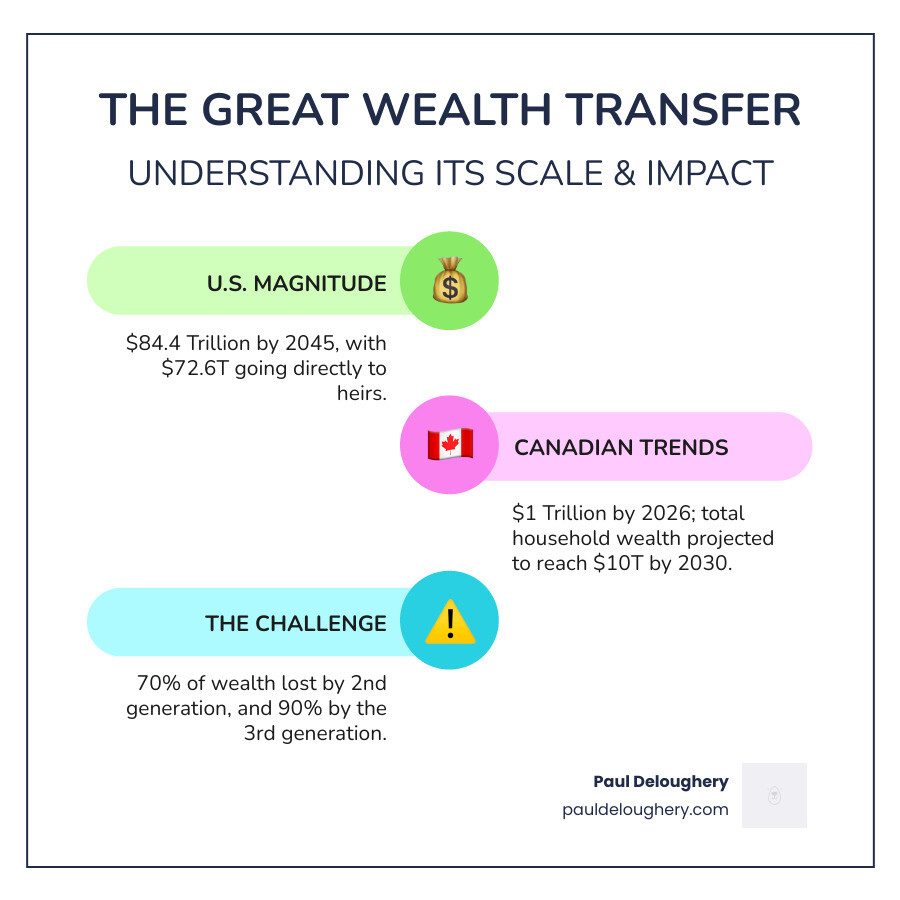
The Unprecedented Scale and Impact of the Great Wealth Transfer
The sheer magnitude of the generational wealth transfer is an economic phenomenon unlike any before. In the United States, Baby Boomers and the Silent Generation are set to pass on a staggering $84.4 trillion in assets through 2045, with $72.6 trillion going directly to heirs. To put that in perspective, this amount is more than three times the U.S. GDP in 2023. This isn’t just an American story; Canada expects a $1 trillion transfer by 2026.
These figures represent a profound demographic and economic shift. Decades of asset appreciation in real estate and financial markets have created immense wealth that is now transitioning to new hands. Understanding the scope of this transfer is the first step for any family looking to prepare. Our team provides specialized insights through More info about Private Wealth Advisory to help you steer this landscape.
Who Are the Beneficiaries?
While many assume Millennials and Gen Z will be the primary recipients, the immediate picture is more nuanced. Gen X is actually positioned to receive the largest windfalls in the near term. The average age for inheriting a fortune of $5 million or more is 46.1, placing Gen X (currently aged 44-59) squarely in line for these transfers.
Over the next quarter-century, Millennials will receive the largest overall share. However, this wealth is highly concentrated. The wealthiest 1.5% of households will account for 42% of the total transfers, meaning the top 10% of households will be the primary givers and receivers.
Let’s look at the expected inheritance by generation:
| Generation | Average Age (approx.) | Near-Term Inheritance (next decade) | Long-Term Inheritance (next 25 years) |
|---|---|---|---|
| Gen X | 44-59 | ~ $1.4 trillion per year | ~ $39 trillion |
| Millennials | 28-43 | ~ $8 billion per year | ~ $45.6 trillion |
This concentration suggests the transfer may exacerbate existing wealth disparities.
How Inherited Wealth Will Reshape the Economy
The ripple effects of this monumental generational wealth transfer will reshape our economy, from investment strategies to real estate and philanthropy.
A major shift will be in investment trends. Younger generations are skeptical of traditional stocks and bonds, with 72% believing they can no longer achieve above-average returns from them alone. This pushes them toward alternative assets like private equity and direct investments. More importantly, a massive surge in sustainable and ethical investing is expected. A striking 82% of investors aged 21-43 consider a company’s environmental, social, and governance (ESG) record, compared to just 35% of older investors. This will channel significant capital into ESG-focused funds.

The real estate market will also feel the effects, as inheritances may enable many Millennials to purchase homes. Finally, philanthropy is set to receive a significant boost, with an estimated $18 trillion expected to be donated to charities by 2048.
Social Implications: Wealth Inequality and Gender Equity
While the generational wealth transfer presents opportunities, it also carries critical social implications, particularly for wealth inequality and gender equity.
The most pressing concern is the exacerbation of the wealth gap. Since the transfer is concentrated among the wealthiest households, those who are already fortunate will become more so, widening the divide. For instance, in Canada, the wealthiest 20% of families hold two-thirds of the country’s net worth, while the bottom 40% hold just 2.6%. This transfer is likely to solidify these disparities.
On a more positive note, a powerful trend is emerging in gender equity. Women are ready to control an unprecedented amount of wealth. In Canada, women are expected to inherit $900 billion by 2026. This is partly due to longer life expectancies, leading to a “horizontal wealth transfer” from husbands to wives. This shift will place more women in the role of chief asset manager, influencing investment decisions and philanthropic efforts. We dig deeper into strategies that consider these shifts in Strategic Wealth Transfer.
The “Shirt-Sleeves to Shirt-Sleeves” Proverb: Why Most Generational Wealth Is Lost
The old saying, “shirt-sleeves to shirt-sleeves in three generations,” is a stark reminder that keeping wealth is harder than building it. This isn’t just a proverb; it’s a reality backed by data. Studies consistently show that 70% of wealthy families lose their fortunes by the second generation, and an alarming 90% by the third. This isn’t about bad luck or poor investments—it’s about people problems.

The primary culprits are a breakdown in communication, a lack of trust, and a failure to prepare the next generation to manage wealth wisely. When an inheritance arrives without the context of family history, values, and responsibility, it often slips away. That’s why we focus on building enduring legacies through thoughtful More on Family Succession Planning.
The Top Challenges Families Face
What are the common pitfalls that lead to this outcome? In our work, we’ve identified several recurring themes:
- Lack of financial literacy: Many beneficiaries, even from affluent backgrounds, haven’t received the financial education needed to handle a substantial inheritance. One survey revealed 36% of Canadians worry their children lack the know-how to manage inherited money.
- The taboo of discussing money: For many families, talking about inheritance is awkward. A striking 58% of people haven’t discussed their estate plans with beneficiaries, leaving the next generation unprepared.
- Concerns about beneficiaries’ spouses: Some wealth holders worry about their children’s spouses’ ability to manage money, which can lead to complex trust structures that create friction if not communicated clearly.
- “Sudden Wealth Syndrome”: A large, unexpected inheritance can be overwhelming, leading to impulsive spending, poor decisions, and strained relationships. It’s like being handed the keys to a powerful car without learning to drive.
- Failure to prepare the next generation: This is the biggest challenge. Wealth is tied to values and purpose. Without instilling these lessons, wealth can become a burden rather than a blessing.
The Human Element: The Real Reason for Failure
The primary cause of unsuccessful wealth transfer isn’t found in legal documents but in the lack of communication and trust within the family. While solid legal and financial plans are essential, they are merely tools. The true success of a generational wealth transfer hinges on the human element. For a deeper dive, we recommend the Nasdaq article on why families lose wealth.
When wealth dissolves, it’s rarely because a trust was drafted incorrectly. More often, it’s because:
- Family dynamics break down: Without open communication, inheritances can fuel conflict and damage relationships.
- There’s a lack of shared purpose: If inheritors don’t understand the values and intentions behind the wealth, they are less likely to act as responsible stewards.
- Family values erode: An enduring legacy is about values, traditions, and shared history. If these non-financial aspects are neglected, the foundation of the wealth weakens.
- Insufficient non-financial legacy planning: Many estate plans focus on the “what” (assets) but overlook the “why” and the “who.” Preparing heirs means teaching them about the family’s journey and the responsibilities that come with significant resources.
A Blueprint for Enduring Wealth: The Two Pillars of a Successful Generational Wealth Transfer
To defy the “shirt-sleeves to shirt-sleeves” proverb, a successful generational wealth transfer requires a holistic approach. It’s not enough to have documents in place; you must also prepare the people who will receive the wealth. We call this our blueprint for enduring wealth, built upon two critical pillars that integrate both legal and human elements. Our strategies for Long-Term Wealth Preservation are designed with this dual focus.

Pillar 1: The Foundational Legal & Financial Framework
This pillar is what most people associate with estate planning. It’s about creating a robust structure to protect assets, minimize taxes, and ensure your wishes are legally enforceable. This includes:
- Wills: The cornerstone document that dictates how your assets will be distributed.
- Trusts: Versatile instruments for sophisticated planning, from protecting assets to providing for beneficiaries with special needs or ensuring a family business stays intact.
- Powers of Attorney: Designates trusted individuals to make financial and healthcare decisions if you become incapacitated.
- Healthcare Directives (Living Wills): Specifies your wishes regarding medical treatment.
- Beneficiary Designations: Crucial for accounts like IRAs and life insurance, as they often override your will.
For high-net-worth families, advanced tools like Generation-Skipping Trusts (GSTs) can be powerful. They allow wealth to be transferred to grandchildren or later generations, bypassing a generation for estate tax purposes and offering significant tax savings. States like Arizona are particularly attractive for these trusts due to favorable laws. We guide clients through the intricacies of Transferring Assets to a Trust and Asset Protection Planning to build this framework.
The Dangers of DIY Probate Avoidance
Many people focus on “avoiding probate,” but attempts to bypass it without professional guidance can lead to devastating consequences. Simply adding a child’s name to a bank account or deed might seem easy, but it can expose that asset to the child’s creditors, divorce proceedings, or lead to the unintentional disinheritance of other loved ones.
We’ve seen countless “horror stories” where well-intentioned DIY efforts result in complex legal battles and family estrangement. In blended families, a simple joint tenancy can inadvertently cut out stepchildren entirely. People often overlook these second and third-order consequences. An online will or generic trust template cannot account for your unique family dynamics or changing tax laws. While probate avoidance is a valid goal, it must be part of a comprehensive, professionally guided strategy. For specific guidance, we offer insights on Avoiding Probate in Arizona.
Pillar 2: Preparing Heirs for a Life of Stewardship
This is where many traditional estate plans fall short. It’s not enough to transfer assets; we must also transfer wisdom, values, and a sense of responsibility. This pillar focuses on preparing the next generation to be responsible stewards.
- Financial Education: Go beyond basic budgeting. Teach heirs about investing, philanthropy, and tax implications to empower them to make informed decisions.
- Instilling Family Values: What principles guided you in accumulating wealth? Hard work, integrity, generosity? These values must be explicitly taught.
- Sharing Family History: Understanding where the wealth came from—the struggles and sacrifices—gives it meaning and fosters a sense of responsibility.
- Defining the Purpose of Wealth: Is the wealth for security, philanthropy, or entrepreneurship? A clear, shared purpose guides decisions and prevents aimless spending.
This proactive approach is vital. It’s why we offer Legacy Planning Advice and resources like Raising Minors Rich. A successful generational wealth transfer is about nurturing the next generation to carry the family’s legacy forward with purpose.
Frequently Asked Questions about Generational Wealth Transfer
As you explore generational wealth transfer, questions are natural. Here are some of the most common ones we hear.
How much money is considered “generational wealth”?
There’s no official number, but many experts point to over $1.5 million per heir as a benchmark. However, true generational wealth is less about a lump sum and more about sustainability. The goal is to create a lasting resource through income-producing assets that can grow and provide for future generations. It’s about building a legacy that keeps on giving, not just a one-time payout.
At what age do most people receive an inheritance?
While many younger people expect an inheritance soon, the data shows a different reality. The average age to inherit substantial wealth ($5 million or more) is around 46.1 years old. For even larger sums, it’s closer to 47.6. This means Generation X (currently aged 44-59) is receiving the largest windfalls in the near term. The simple reason is that Baby Boomer parents are living longer, so the transfer often happens later in life than many heirs anticipate.
What is the first step I should take to plan my wealth transfer?
This is the most important question. Before contacting lawyers or advisors, the crucial first step is to start open and honest conversations within your family.
Sit down with your loved ones to talk about your intentions, share your values, and articulate your vision for the wealth. This transparency builds trust, manages expectations, and helps everyone understand the “why” behind your decisions. Once you’ve had these discussions, then it’s time to seek professional guidance. A qualified estate planning attorney can help you build the robust legal and financial framework that aligns with your family’s unique needs. This two-pronged approach—addressing both the human and legal elements—is key to an enduring legacy. You can begin building your secure future with our Estate Planning Services.
Conclusion: Building a Legacy That Lasts Beyond a Lifetime
The generational wealth transfer is more than moving money; it’s about creating a legacy that carries your family’s values, wisdom, and purpose through time.
After 25 years of helping families, I’ve seen what separates those who preserve their wealth from those who don’t. The difference isn’t the size of their bank account but their commitment to preparing the next generation.
The families who beat the “shirt-sleeves to shirt-sleeves” curse understand that planning has layers. A solid legal framework of trusts and wills is the foundation. But on top of that, you must build something more important: prepared heirs who understand the responsibility that comes with wealth. When the next generation knows the family story and the values behind the money, they are far more likely to be good stewards.
At Paul Deloughery, we believe your legacy isn’t just what you leave behind—it’s what you leave in the people you love. Through our Legacy Secure Plan and Sudden Wealth Protection Law, we help families integrate the legal, financial, and educational strategies needed to safeguard assets and family harmony.
The Great Wealth Transfer is happening. The question is: will your family successfully steer it, or become another cautionary tale? The time to act is now.
Ready to build a legacy that truly lasts? Let’s start this important conversation together.
Start building your legacy with our Estate Planning Services